
Hi folks!
Good news! My poison ivy is 95% cured! I’ve gotten some good rest, some good food, and had a great break overall. It was nice to see people back home in Hayward, as well as work a little bit to re-pad my trail budget! I have a flight scheduled to head back to northern Virginia on Friday, when I will resume my trek north to Mt. Katahdin in Maine.
Another thing I spent some time focusing on during this break has been my gear. As a thru hiker, your gear is all you have. Before beginning a long trail, I’d be willing to bet that the majority of all planning done by aspiring thru hikers revolves around meticulously deciding what to bring along, and what can be left behind. On trail, weight is king, so one quickly learns how to pare down their ounces. So, today, I’d like to go over my own gear setup. We’ll go through all the items that I pack out on the AT, some pros and cons, some recommendations, and my general advice for others that might want to go on a long hike.

Thru hikers will generally put great importance into what’s referred to as “the big three”. Those are: your pack, tent, and sleeping bag. Sometimes, that’s extended to also include your sleeping pad. Together, these items comprise the biggest portion of your weight. For me, I have the following:
- Pack: Superior Wilderness Designs 50 L Movement pack
- Awesome pack, I cannot recommend enough. Weighs less than a pound, and is made of Ultra 200X waterproof laminate fabric. 10/10. I also put a trash bag inside my pack that I pack all of my “must stay dry” items into, just in case.
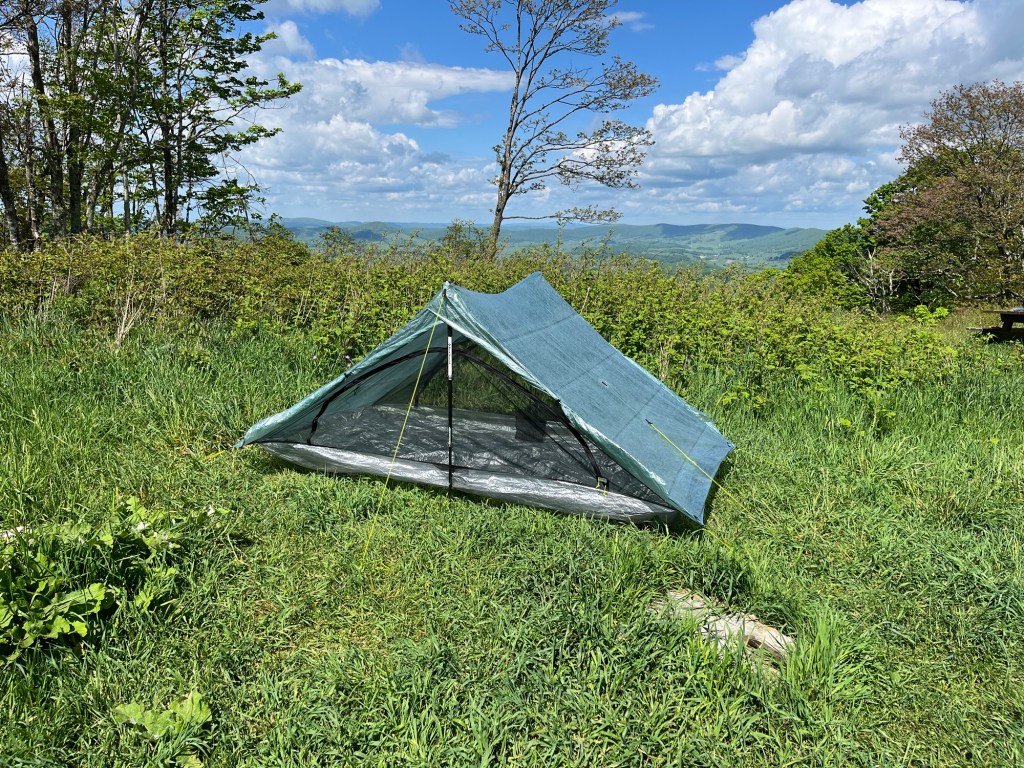
- Tent: Zpacks Duplex
- Not pictured, as it is getting repaired presently. However, this tent weighs just under one pound, is super roomy, and made of Dyneema. It’s single-walled, so it gets some condensation on the inside on colder nights, but is a great tent.
- Sleeping bag: Therm-a-Rest Hyperion 32°F
- This is a down sleeping bag, and kind of overkill for the summer temperatures as they are now. I still like to have it though.
- Sleeping pad: Therm-a-Rest Neo Air X-Lite
- I’ve had it for years, just patched a bunch of pinholes in it. It folds down to the size of a water bottle, though. When it was new, it sounded like you were sleeping on a bag of potato chips.

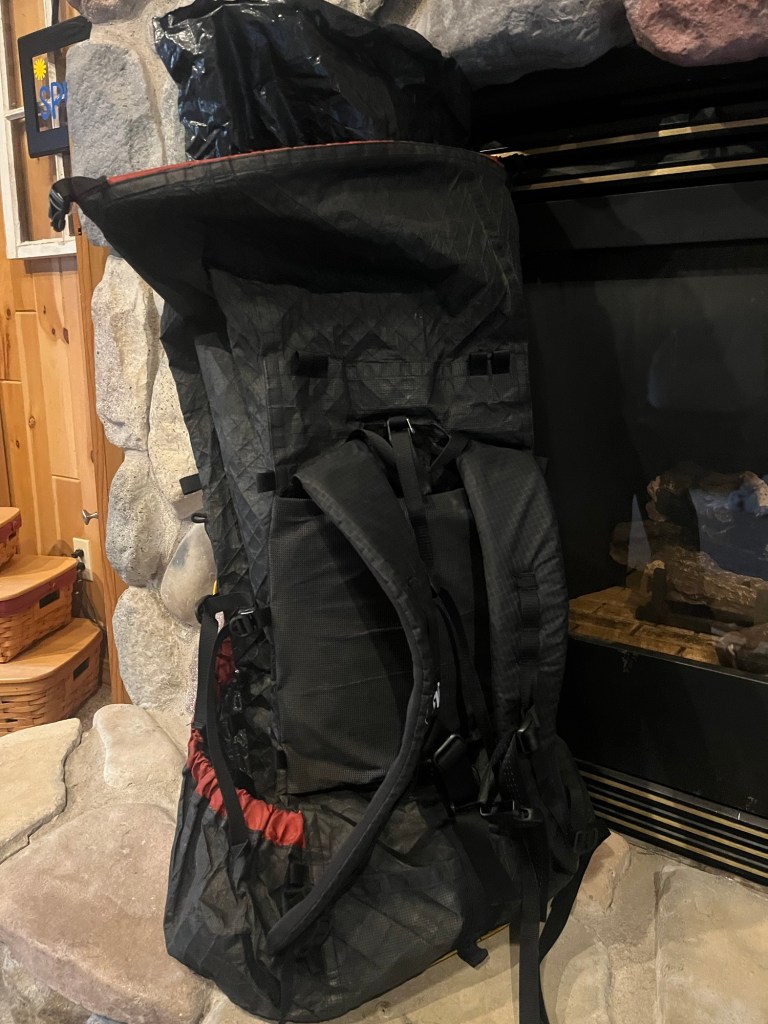
Also pictured with my pack are my trekking poles. They are Black Diamond Alpine Carbon Cork poles. I highly recommend trekking poles when hiking to get your arms in on the hiking action, as well as to offer balance and fall protection. I also have a tent that sets up with my trekking poles, so they are a necessary carry for that purpose.
The next heaviest stuff you’ll have is likely to be your clothes. What you wear is highly dependent on personal preference, but I carry the following wearables:
- 3 sets of underwear (2 for hiking, one for camp), Ex Officio brand
- 3 sets of socks (2 for hiking, one for camp), Darn Tough wool
- Incidentally, Darn Tough has a lifetime warranty on their socks, and I just mailed a pair in to be replaced. Turns out, 800+ miles on a pair of socks may wear a hole through them, no matter how tough they are!
- 3 shirts (2 for hiking, one for camp; see a pattern here?)
- Wear synthetic fabrics for hiking, never cotton. Cotton takes a long time to dry. My camp shirt is cotton, though.
- One pair of running shorts (Nike)
- One pair of joggers (Patagonia)
- A hat (got to represent my home state! 🧀)
- A jacket
- This is new going back to the trail, but I swapped out my wool hoodie and my rain coat for an orange Brooks running rain jacket. It saved me about 1.3 pounds, as I just don’t need that heavy of a sweatshirt for this hellish summer, nor do I care as much about getting a little wet from the rain as I’m hiking.
- Sunglasses
- Don’t go with anything expensive on these. I’ll be rocking a pair of my dad’s Smith & Wesson safety sunglasses, affectionately known as “Kenny Tingo’s”, as they are a part of his signature style. 😎
- Shoes: Hoka Speedgoat 5
- I use these shoes for trail running back home. They are great shoes. My first pair lasted me over 700 trail miles, so they’re resilient, too. Shoes are one of the most important pieces of gear, but are highly personal. Play around with different brands and models to find what works for you.
And that’s it! Just keep your camp clothes religiously dry, and you’ll be fine. I keep my clothes that I’m not wearing in a Hyperlite brand dry bag that has a fleece-lined interior. At night, I turn it inside-out, put some clothes back in it, and use it as a pillow! It is one of my favorite pieces of gear!

Next, let’s talk about my kitchen. It’s a small setup, but is of vital importance to my hike. Not everybody cooks hot meals on trail, but I find that a warm meal at the end of the day is really reinvigorating to the body and spirit!
- 1 L titanium pot
- With 1 L, you can cook two ramen blocks at the same time!
- Long-handled titanium spork
- I am team spork for life (those spoonies can go pound sand), and a long handle makes it easy to reach down into dehydrated food bags!
- Stove: MSR Pocket Rocket
- Screws right on top of a fuel canister. This is the most common type of stove you’ll see on the AT
- Fuel
- A lighter
- A knife
- For sentimental reasons, I’m bringing along the groomsman gift Leatherman that my brother, Deric, gave me at his wedding. It’s heavier than one might want to carry, but it reminds me of him, so I’m taking it!

Water supplies come next! It’s a short, but important list.
- 1 L Smartwater bottle
- Sometimes, I carry two of these. For whatever reason, Smartwater bottles are the unofficial bottle of the thru hiking community. Everybody has one.
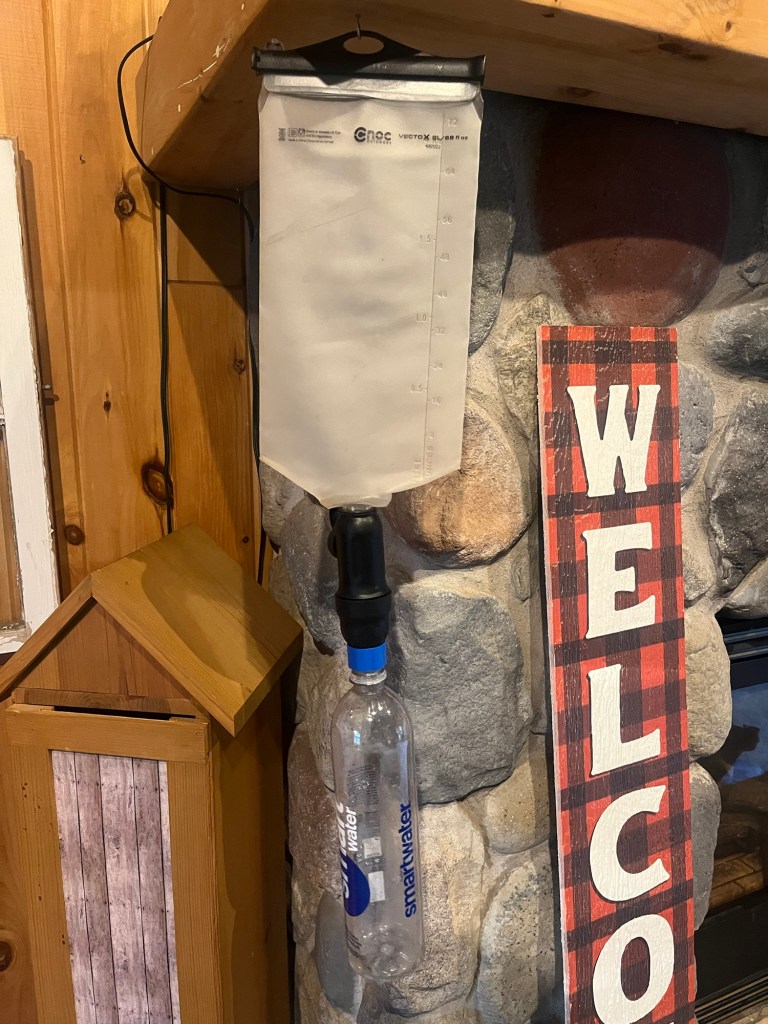
- 2 L CNOC water bladder
- Sawyer Squeeze water filter
I always fill my water bladder with dirty water, and then squeeze it through my Sawyer filter into my Smartwater bottle (as pictured). Clean water is the only thing that goes in the bottle, with dirty water being the only thing that goes in the bladder.
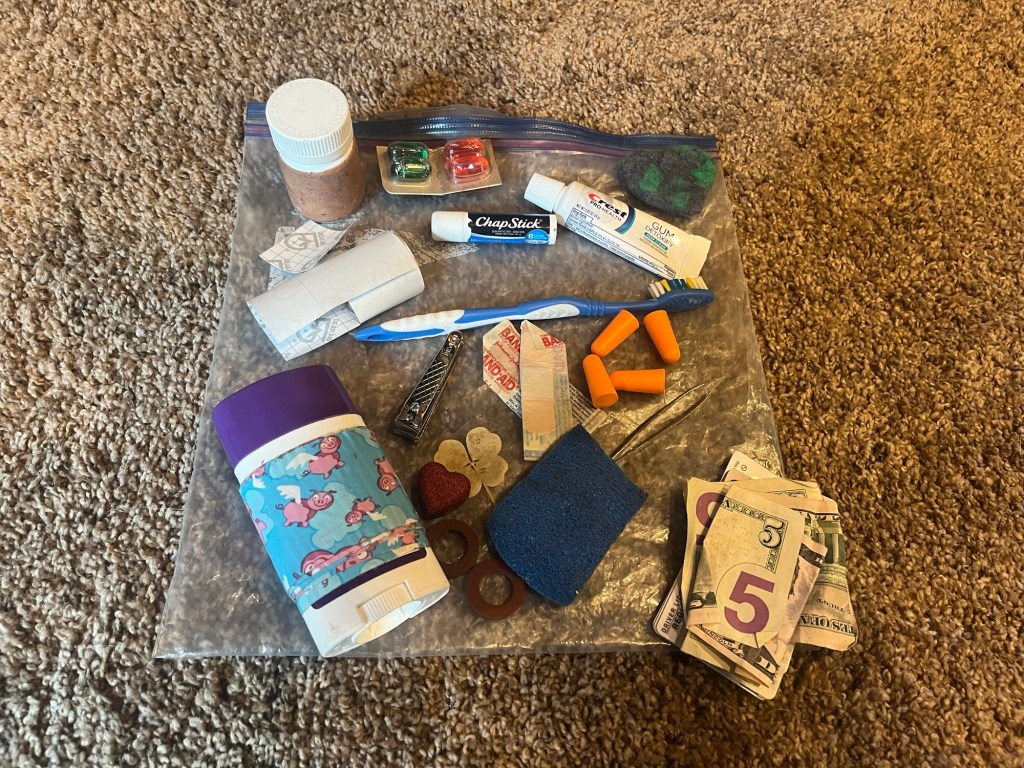
Next comes toiletries and some assorted stuff:
- “The pharmacy”
- My pill bottle has assorted drugs, including ibuprofen, Imodium, Benadryl, cold medicine, melatonin, and three orange Tik Taks. I’ve got Leukotape wrapped around it, which I use for blisters (way better than moleskin)
- Chapstick
- Toothbrush and toothpaste
- Anti-chafing stick
- I wrapped duct tape (flying pig style) around this for miscellaneous repairs. Under the duct tape, there’s a needle and some thread for gear repairs, if needed. Also for popping blisters!
- Vinyl gear repair tape (as seen on my sleeping pad!)
- Nail clippers (so your toenails don’t get to looking like Fritos)
- Earplugs (for when folks snore in the shelter)
- Band-Aids
- A sponge for cleaning my pot
- Extra O-rings for my water filter
- Tweezers
- An epoxy heart my mom gave me ♥️
- A four-leafed clover (you know, for luck!)
- Money/debit card/ID
We’re in the home stretch, folks! Nextly, we’ll chat electronics.
- Not pictured is my phone, which is taking this photo. I have an iPhone 13 with an otterbox case.
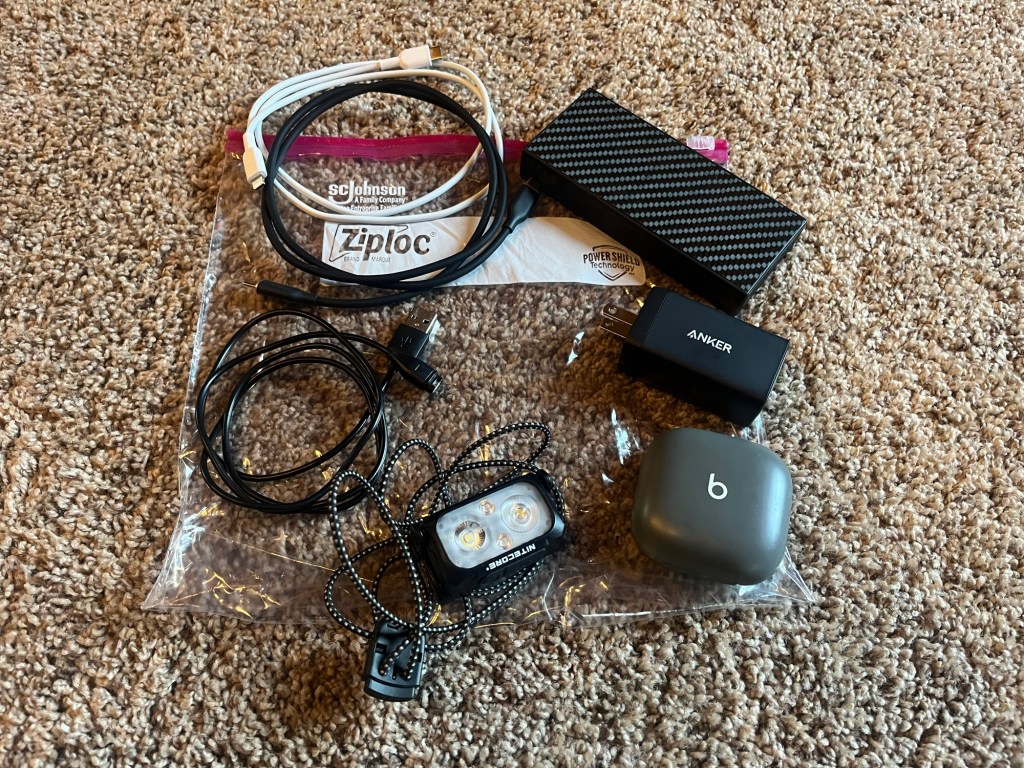
- Anker 20,000 mAh power bank (will charge my phone 0-100% four times over)
- USB-C iPhone cable
- USB-C to USB-C cable (charges my power bank, headlamp, and headphones)
- Nitecore headlamp (has three brightness settings, and a red light mode so as not to blind your fellow hikers)
- Beats wireless earbuds (I listen to a lot of audiobooks, podcasts, and music on trail; use only one earbud at a time so you can hear other hikers, or rattlesnakes!)
- Anker 65W wall plug (has two USB-C ports, and one USB regular port; a monster of a charger)
- Garmin Fenix 5X and charging cable (that’s my watch; its battery lasts about one week, and I refuse to leave it at home)
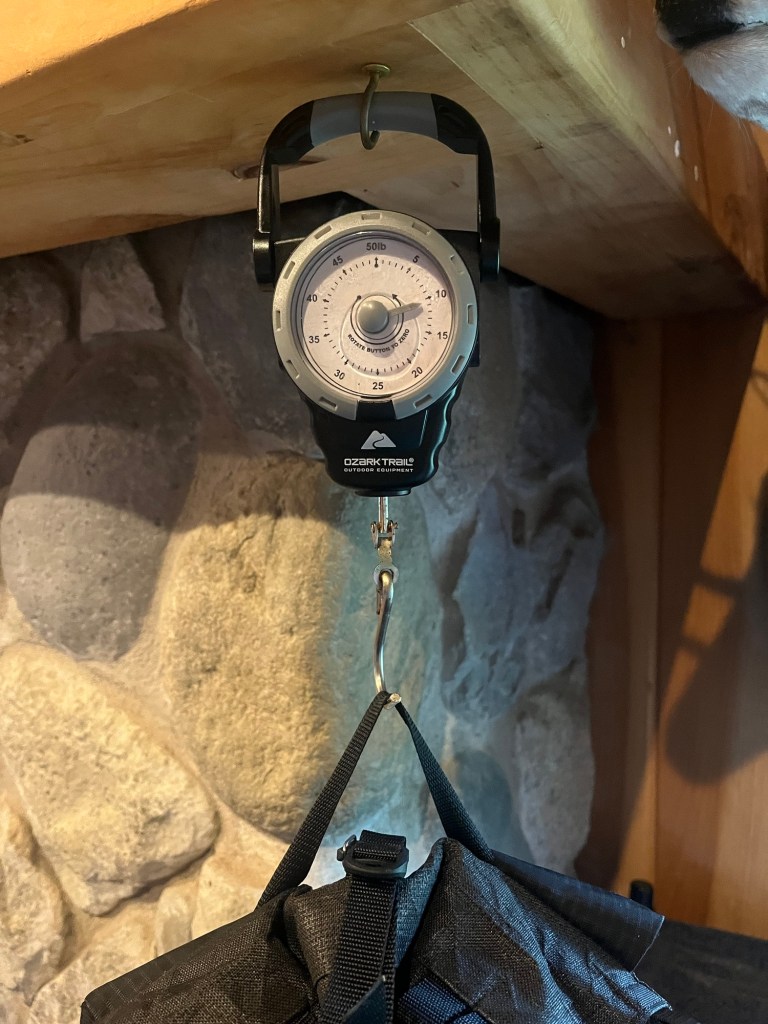
That’s it, folks! That is all of the gear I will pack back out. I am sure you’re wondering how heavy that all is, so I’ll tell you. The total weight of all of one’s packed gear, which excludes weight you wear (the clothes on your back), as well as weight from consumables like food and water, is referred to as your base weight. I am extremely happy to report that my base weight is hanging at just about 12 pounds! Or, at least it will when I get my tent back. I have worked hard at whittling that weight down, and I can assure you it is worth it to carry less. You really feel like you can fly down the trail with this light of a pack.
Not included in base weight is food. Really, food becomes the single heaviest thing you carry. I bought food already for when I hit the trail on Friday, and it’s 10 lbs altogether. I’ve included a picture of my food resupply, which is pretty typical of what I tend to pack out. I know y’all are jealous, and wish that you, too, could be eating this day in and day out. You may understand why getting a good meal at a restaurant is enough to elicit tears of joy from a thru hiker. This food resupply is enough to last about 3 days.

Now you know a bit more about what we thru hikers carry! It’s everything you need, reduced down to 12 pounds, and loaded on your back. I hope this long post has been insightful and interesting. If anybody out there is looking to do their own hiking and wants to chat about gear, I’d be more than happy to talk your ear off; just send me a message! There’s nothing a thru hiker loves to talk about more than gear!
I’ll be back on the trail in two days! The next update I’ll give y’all, I’ll be in Shenandoah National Park. Until next time folks!

TLDR: gear is super important! Read the dang post!
 Tingo Hikes!